How Stem Cell Therapy Supports the Body’s Natural Healing Process

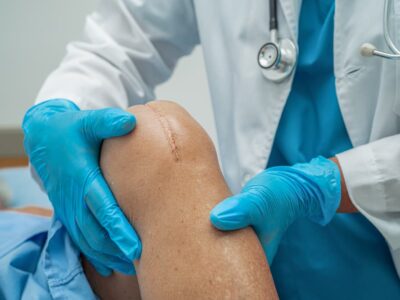

The appeal of stem cell therapy is easy to understand. Most medical treatments are designed to manage symptoms, reduce inflammation, control pain, or remove damaged tissue. Stem cell therapy enters the conversation from a different angle. Instead of simply suppressing the problem, it aims to support the body’s own repair mechanisms.
That distinction matters, especially for people dealing with stubborn orthopedic injuries, joint degeneration, tendon damage, or recovery after surgery. In clinical practice, the most thoughtful discussions about stem cell therapy are rarely about miracle cures. They are about biology, timing, tissue quality, and whether the body still has enough healing capacity to respond.
When stem cell therapy is presented responsibly, it is not a magic reset button. It is a biologic approach that may help create better conditions for repair. For some patients, that can mean less pain and better function. For others, it may mean slowing the progression of tissue breakdown or improving recovery when standard conservative care has stalled. The details matter, and they matter a great deal.
The body already knows how to heal
A healthy body is constantly repairing itself. Skin closes after a cut. Bone remodels after a fracture. Muscles recover from strain. Even tissues with limited blood supply, such as tendons, ligaments, and cartilage-adjacent structures, attempt repair after injury. The challenge is not whether healing exists. The challenge is whether the healing response is strong enough, organized enough, and sustained long enough to restore useful tissue.
That process relies on several coordinated steps. First, the body identifies damage and sends inflammatory signals. Next, it recruits repair cells and supportive molecules to the site. Then it lays down new tissue, remodels it, and, ideally, restores strength and function over time. Problems arise when one part of this sequence is weak, excessive, or poorly timed.
Anyone who has worked with chronic tendon injuries sees this regularly. A fresh tendon strain may recover with rest, physical therapy, and progressive loading. A tendon that has been painful for a year is different. The tissue often shows disorganized collagen, reduced cellular activity, and a poor healing environment. The body is still trying, but the response has lost momentum.
Stem cell therapy is designed to support that stalled process.
What stem cells actually do
The phrase "stem cells" often creates confusion because it sounds as if these cells simply arrive and transform into brand-new body parts. That is an oversimplification, and in many cases, not the main reason the therapy may help.
Stem cells are valuable partly because they can differentiate into other cell types under the right conditions, but equally important is their signaling role. They communicate with surrounding tissues. They release bioactive factors that can influence inflammation, recruit other repair cells, and support tissue regeneration. In practical terms, they may help shift an injured area from a state of chronic dysfunction toward a more active healing response.
A useful way to think about it is this: stem cells are not just building blocks, they are coordinators. They participate in the conversation taking place inside damaged tissue. That conversation involves immune cells, blood vessels, growth factors, extracellular matrix, and mechanical stress. If the signals are chaotic or weak, healing tends to be incomplete. If the signals become more balanced and productive, the tissue often has a better chance to recover.
This is why Stem Cell Therapy is usually discussed in regenerative medicine rather than routine pain management. The goal is not merely to numb pain. The goal is to improve the local biology.
Why some tissues struggle to recover on their own
Not all injuries behave the same way. A young athlete with a mild muscle tear has very different healing potential than a 62 year old with knee osteoarthritis and a degenerative meniscus. One has robust circulation and active tissue turnover. The other may have years of wear, lower cellular responsiveness, and mechanical changes that keep irritating the joint.
Cartilage offers a good example. It has very limited direct blood supply, which is one reason cartilage damage tends to linger. Tendons and ligaments have a similar issue, though not to the same extent. They are relatively underpowered from a healing standpoint. They can recover, but often slowly and incompletely.
Age also changes the equation. Older tissue generally has fewer high-functioning repair cells, slower signaling, and a greater tendency toward chronic inflammation. This does not mean older adults cannot benefit from regenerative approaches. It means expectations should be realistic. A 28 year old with a focal cartilage injury and good alignment is not the same case as a 70 year old with advanced bone-on-bone arthritis.
This is where judgment becomes more important than enthusiasm. Stem cell therapy tends to work best when there is enough viable tissue left to support, rather than total structural collapse.
Where stem cell therapy comes from
In most legitimate orthopedic and sports medicine settings, the stem cells used in therapy are commonly derived from the patient’s own body. Bone marrow aspirate is one of the most established sources. Adipose tissue, or body fat, has also been used in some settings because it contains regenerative cells and supportive stromal elements.
Bone marrow is often taken from the pelvis, where access is relatively straightforward and cell yield can be favorable. The material is then processed and prepared for injection into the target tissue. Accuracy matters here. A precisely placed injection into a joint, tendon sheath, or ligament attachment is not the same as a blind injection based only on surface anatomy. Ultrasound or fluoroscopic guidance is often used for this reason.
Patients sometimes assume the procedure is similar to a standard cortisone shot. It is not. The intent, preparation, and post-procedure strategy are different. Cortisone is typically used to calm inflammation quickly. Stem cell therapy is intended to support repair over time, which means the response can be slower and more dependent on rehabilitation.
How the therapy supports healing rather than replaces it
A common misunderstanding is that stem cell therapy "heals" an injury on its own. In reality, it supports conditions under which healing becomes more likely. That support can happen in several ways.
First, stem cells and associated biologic components can influence inflammatory signaling. This is important because inflammation is not inherently bad. Early inflammation is necessary for healing. Chronic, dysregulated inflammation is the problem. In many painful conditions, the body gets stuck in a loop where inflammation persists but constructive repair does not keep pace. A useful regenerative treatment aims to interrupt that cycle.
Second, stem cells may help recruit local repair mechanisms. Injured tissue does not recover in isolation. It depends on communication with nearby cells, blood vessels, immune mediators, and structural proteins. A biologic injection can function as a signal amplifier, encouraging activity that had become sluggish or poorly coordinated.
Third, stem cells may support matrix remodeling. Tissues such as tendons, ligaments, and cartilage rely on an organized extracellular matrix for strength and function. In chronic injury, that matrix is often disordered. The goal is not just to make the area less painful. It is to promote more functional tissue quality.
Fourth, the therapy may help create a better environment for rehabilitation. This is one of the less glamorous but most important parts. A knee that becomes less reactive and mechanically more stable gives a patient a better chance to rebuild strength, restore movement patterns, and reduce compensations. The biologic treatment may open the door, but rehabilitation is what helps the patient walk through it.
Conditions where this approach may have a role
Stem cell therapy is most often discussed in musculoskeletal medicine, though research and clinical interest extend into other areas. In everyday practice, the more defensible use cases tend to involve chronic tendon injuries, certain ligament injuries, mild to moderate osteoarthritis, focal cartilage lesions, and selected cases of delayed tissue recovery.
It is especially relevant when standard conservative care has been tried seriously. That means the patient has not simply skipped to an advanced procedure after two weeks of discomfort. They have usually gone through a careful diagnostic workup, activity modification, physical therapy, and, in some cases, other injection-based options. At that point, stem cell therapy may be considered as part of a broader strategy.
There are also edge cases that require caution. A patient with severe joint collapse, marked deformity, or advanced instability may not be a strong candidate. Likewise, a tendon that is fully ruptured and retracted generally needs a surgical conversation, not a regenerative shortcut. These are the situations where sales-driven messaging causes harm. Biology has limits, and structural mechanics still matter.
The procedure is only one part of the treatment
The day of the injection gets a lot of attention, but it is rarely the whole story. Good outcomes often depend on what happens before and after the procedure.
Before treatment, diagnosis has to be accurate. Pain in the shoulder, for example, can come from the rotator cuff, biceps tendon, labrum, joint capsule, cervical spine, or a mix of these. Injecting a vaguely painful area without a precise diagnosis is poor medicine. Imaging can help, especially when matched to a physical exam and patient history.
After treatment, the healing response needs protection and direction. Most patients are advised to reduce excessive loading for a period, then gradually build activity. The exact timeline varies by tissue type, severity of injury, and the treatment used. Tendons may need a carefully staged return to loading. Arthritic joints may benefit from mobility work, strength training, and gait correction. The point is simple: biologic therapy works best when paired with mechanical common sense.
A practical way to frame recovery is this:
- The tissue needs time to respond biologically.
- Pain relief may lag behind the injection itself.
- Overloading too soon can undermine the process.
- Underloading for too long can also weaken the result.
- Follow-up matters because progress is rarely linear.
That last point is worth emphasizing. Recovery after stem cell therapy is often uneven. A patient may feel sore for days, improved for two weeks, then irritated again after increasing activity. That pattern does not automatically mean failure. Healing tissue is sensitive to load, and part of the clinician’s job is helping the patient interpret what is normal versus what signals a true setback.
What patients often notice, and when
Some people report early changes in pain or stiffness within a few weeks. Others notice very little at first and improve more gradually over two to six months. The timeline depends on the condition being treated. A joint with low-grade inflammation may calm sooner than a tendon that has been degenerating for years. Structural adaptation takes time.
In real-world follow-up, the most meaningful improvements are often functional before they are dramatic. A patient says they can climb stairs with less hesitation. They sleep better because they are not waking from shoulder pain. They return to short walks, then longer walks, then gym work. These are not flashy outcomes, but they are the ones that change lives.
It is also common for pain scores to improve before imaging changes are obvious, if imaging changes appear at all. That can frustrate patients who expect a scan to prove success. Function, symptom pattern, and physical capacity remain central markers. Imaging should support the clinical picture, not replace it.
The trade-offs and limitations deserve honest attention
Any serious discussion of Stem Cell Therapy has to include limitations. The first is variability. Not every preparation is the same, not every clinic uses the same protocol, and not every patient has the same healing potential. The term itself can cover a broad range of methods, which makes blanket claims unreliable.
The second limitation is evidence quality. Some applications have encouraging data, especially in orthopedics, but evidence is still evolving. There are areas where outcomes look promising and others where claims run ahead of the research. That does not make the therapy illegitimate. It means the conversation should be specific, condition-based, and honest about what is known.
The third is cost. Many regenerative procedures are not fully covered by insurance, which places a burden on patients to weigh expected benefit against financial reality. In my experience, this is where clear counseling matters most. A therapy can be biologically interesting and still be the wrong choice for a patient if the expected gain is modest, the mechanical problem is severe, or the rehabilitation commitment is unrealistic.
The fourth is that safety depends heavily on source, handling, and indication. Autologous treatments, using the patient’s own cells, avoid some concerns associated with donor material, but no procedure is entirely risk free. Infection, bleeding, pain flare, and failed response are all https://anotepad.com/notes/jggj3pap possible. The best clinics discuss these plainly.
What a thoughtful candidate evaluation looks like
A good candidate is not simply someone in pain. A good candidate is someone whose diagnosis, tissue status, goals, and overall health make the treatment reasonable.
Several factors usually shape that decision:
| Factor | Why it matters | |---|---| | Tissue condition | Mild to moderate degeneration often responds better than end-stage destruction | | Mechanical alignment | Poor joint mechanics can continue to stress the tissue even after treatment | | Health status | Smoking, uncontrolled diabetes, and systemic inflammation can impair healing | | Activity goals | The desired outcome should match what the tissue can realistically support | | Commitment to rehab | The procedure is more effective when paired with structured follow-through |
This is one area where clinical maturity shows. A responsible practitioner is comfortable saying no. If the hip is severely arthritic and range of motion is profoundly limited, a biologic injection may buy little. If the tendon is partially damaged, the mechanics are addressable, and the patient is prepared to do the work, the conversation is very different.
Why rehabilitation and biomechanics still matter
There is a temptation to view regenerative medicine as a way around physical therapy, movement retraining, or strength work. That usually leads to disappointment.
Tissue does not exist in a vacuum. A painful knee is affected by hip strength, foot mechanics, body weight, training volume, and daily movement habits. A recurrent elbow tendon problem may involve grip load, shoulder control, work ergonomics, and recovery capacity. Stem cell therapy may improve the local environment, but if the forces that caused the problem remain unchanged, the tissue stays under stress.
I have seen this play out in both directions. One patient receives a well-targeted biologic treatment, follows a staged rehab plan, corrects loading errors, and steadily improves over months. Another receives a similar procedure, returns too quickly to high-impact activity, ignores progressive strengthening, and declares the treatment ineffective after a flare. The difference is not always the injection. Often, it is the system around it.
That is why the best outcomes tend to come from integrated care. Diagnosis, image guidance, procedural skill, load management, and rehabilitation all have to line up.
The future is promising, but discipline matters now
Stem cell therapy has earned genuine interest because it aligns with a powerful medical goal: helping the body repair itself rather than only suppressing symptoms. That goal is not hype. It is a serious clinical pursuit grounded in regenerative biology.
At the same time, the field has attracted aggressive marketing, vague terminology, and unrealistic promises. The answer is not to dismiss the therapy outright, nor to accept every claim at face value. The answer is careful patient selection, precise diagnosis, sound procedural technique, and disciplined follow-up.
When used appropriately, stem cell therapy can support the body’s natural healing process by improving signaling, modulating inflammation, and creating better conditions for tissue repair. It is rarely instantaneous, often gradual, and always dependent on context. The body still does the healing. The therapy helps guide and strengthen that effort.
For patients, that is a more useful expectation than any promise of a miracle. Healing is usually not dramatic. It is incremental, biological, and built through time. When stem cell therapy works well, that is exactly what it supports.
Denver Regenerative Medicine | Stem Cell Therapy, HRT, Testosterone Clinic
Address: 5040 Corporate Plaza Dr Ste 7, Colorado Springs, CO 80919
Phone number: +17205831648
FAQ About Stem Cell Therapy
What are the negative side effects of stem cell therapy?
Stem cell therapy can cause mild short-term reactions like injection-site pain, fatigue, and low-grade fever. More serious risks include infection, immune system rejection, blood clots, unintended tissue growth or tumors, and severe complications from unproven treatments at unregulated clinics.
What diseases can stem cells cure?
Currently, stem cells routinely and effectively cure specific blood cancers, immune deficiencies, and blood disorders using established bone marrow or cord blood transplants. Most other applications—such as for Parkinson's, diabetes, or heart failure—remain experimental or in clinical trials rather than proven cures.
Do stem cell treatments really work?
Yes, stem cell treatments work, but only for a very specific group of conditions. Hematopoietic stem cell transplants (bone marrow transplants) are fully proven and widely used to treat blood cancers like leukemia and lymphoma. However, commercial stem cell treatments for joint pain, arthritis, and wrinkles are largely unproven, experimental, and costly.